

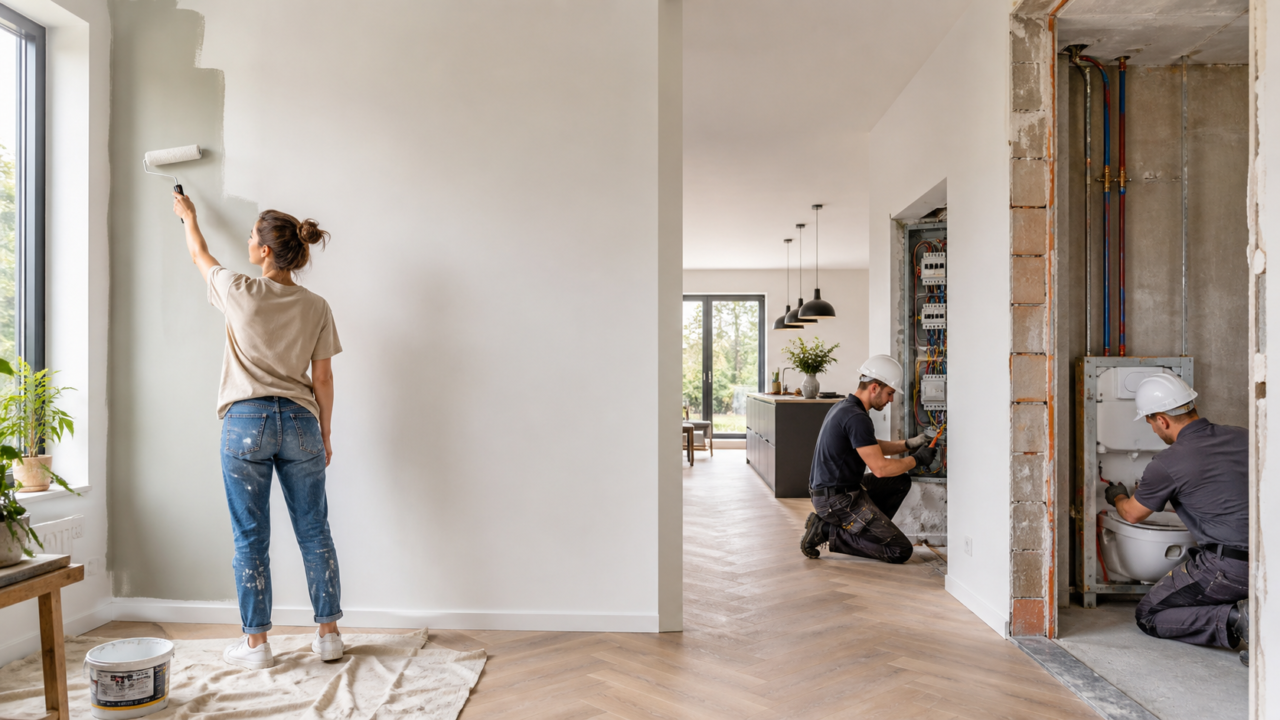
When Not to DIY: Real Home Renovation Examples
Doing small jobs yourself can feel rewarding. However, not every renovation task is safe or smart to do without professional help. That is why many homeowners ask the same question: when not to DIY during a home renovation?
The answer depends on the type of work, the risk level, your tools, your experience, and the condition of the house. Some small tasks are perfect for DIY. In contrast, electrical work, plumbing, waterproofing, structural changes, roofing, and asbestos-related work often need a trained professional.
At Diyara, we help homeowners make practical renovation decisions. As a result, they can save money where possible and avoid expensive mistakes where professional work is needed.
Quick Guide: Should You DIY or Call a Professional?
Some renovation jobs are simple. You can often paint a wall, change handles, or decorate a room yourself.
However, some jobs are risky. Electrical work, plumbing, gas work, roof work, wall removal, and bathroom waterproofing should be handled with care.
If a mistake can cause fire, water damage, injury, or high repair costs, it is better to call a professional.
This simple rule can help you decide faster: DIY small and safe jobs. Call a professional for technical or risky work.
Why DIY Can Be a Good Idea
DIY can be a smart choice for small and simple home improvement tasks. For example, painting a wall, assembling furniture, replacing cabinet handles, or decorating a room can often be done without major risk.
In addition, DIY can help you learn new skills and reduce labour costs. It can also give you more control over the final look of your home.
However, DIY is not always the cheapest option. If a task is done incorrectly, the repair can cost more than hiring a professional from the beginning.
Simple Renovation Tasks You Can Often DIY
Some home improvement tasks are usually suitable for careful homeowners. Still, you should only start when you understand the steps and have the right tools.
| DIY Task | Why It Can Be Suitable |
|---|---|
| Painting walls | Low risk if the surface is prepared properly |
| Installing shelves | Suitable when you use the right wall plugs and check for pipes or cables |
| Replacing cabinet handles | Simple and low-cost improvement |
| Basic garden work | Usually safe with simple tools and planning |
| Small decorative changes | Good way to improve the look without major construction work |
These jobs can be useful starting points. However, even simple work needs patience, preparation, and attention to detail.
Real Example 1: Painting a Room
Painting is one of the most common DIY tasks. It is usually safe, affordable, and easy to learn.
For example, a homeowner can paint a bedroom or living room with the right preparation. This includes cleaning the wall, repairing small holes, using painter’s tape, applying primer when needed, and painting in thin layers.
This is a good DIY task because the risk is low. If something goes wrong, it can usually be corrected without major damage.
Real Example 2: Installing a Shelf
Installing a small shelf can also be a good DIY job. However, you should check the wall type first. A plasterboard wall needs different fixings than a brick or concrete wall.
In addition, it is important to avoid drilling into hidden electrical cables or water pipes. Therefore, a cable and pipe detector can be useful before drilling.
This job is usually suitable for DIY if the shelf is light and the wall is simple. On the other hand, heavy cabinets, kitchen wall units, or floating furniture may need professional installation.
Real Example 3: Laminate Flooring in a Small Room
Installing laminate flooring in a small and square room can be a reasonable DIY project. Many laminate systems are designed for click installation.
However, the floor must be level, clean, and dry. If the subfloor is uneven, the final result may feel unstable or make noise. In that case, preparation becomes more important than the laminate itself.
Therefore, laminate can be DIY-friendly in simple rooms. But if the floor is damaged, uneven, or connected to several rooms, professional help can save time and reduce mistakes.
When Not to DIY During Renovation
Now let’s look at when not to DIY. Some renovation tasks carry a higher risk. These tasks can affect safety, insurance, water damage, fire risk, or the value of your home.
In many cases, the problem is not only the task itself. The hidden risk is what happens later if the work fails.
Renovation Tasks You Should Not DIY
| Task | Why You Should Be Careful |
|---|---|
| Electrical work | Wrong installation can cause fire risk, shock risk, or future faults |
| Plumbing work | Small leaks can create serious water damage over time |
| Bathroom waterproofing | Poor waterproofing can cause hidden moisture and mould |
| Structural wall changes | Removing the wrong wall can damage the stability of the house |
| Roof work | High fall risk and high chance of water leakage if done incorrectly |
| Asbestos-related work | Can be dangerous and may require special rules, packaging, or certified removal |
| Gas-related work | High safety risk and should be handled by qualified professionals |
Real Example 4: Bathroom Waterproofing
A bathroom may look simple from the outside. However, it is one of the most technical rooms in the house.
For example, a shower area must be waterproofed correctly before tiling. If this step is done poorly, water can slowly enter the wall or floor. At first, you may not see any problem. Later, you may notice mould, loose tiles, bad smells, or damage in the room below.
This is a clear example of when not to DIY. Bathroom waterproofing should be done carefully and professionally.
Real Example 5: Moving Electrical Points
Moving a light switch or socket may look like a small job. However, electrical work can be risky if you do not know the system.
Incorrect wiring can create faults, overheating, or fire risk. In addition, poor electrical work can create problems during inspection, future renovation, or property sale.
For this reason, electrical changes should normally be handled by a qualified professional.
Real Example 6: Removing a Wall
Removing a wall can make a home feel larger and more modern. However, not every wall is safe to remove.
Some walls are load-bearing. Others may contain pipes, cables, ventilation, or hidden structural elements. If you remove the wrong wall without checking, the damage can be serious and expensive.
Therefore, wall removal is another strong example of when not to DIY. Before changing walls, it is smart to ask for professional advice.
Real Example 7: Asbestos or Unknown Old Materials
Older homes may contain materials that need special care. For example, asbestos can sometimes be found in old pipes, roofing sheets, panels, or other building materials.
If you are not sure what a material is, do not cut, break, sand, or remove it yourself. Instead, stop the work and ask for proper advice.
For general guidance about safe and sustainable DIY choices, homeowners can also read information from Milieu Centraal.
Check If a Permit Is Needed
Some renovation work may need a permit or notification. This depends on the type of work, the property, and local rules.
Before starting larger renovation work, it is smart to check the official Dutch permit guidance. You can use the Vergunningcheck from the Omgevingsloket to check whether a permit or notification may be needed.
This step can help you avoid delays, extra costs, or legal problems later.
How to Decide: DIY or Professional?
Before starting any renovation task, ask yourself a few simple questions.
- Can a mistake cause water damage, fire risk, or safety problems?
- Do I fully understand the materials and tools?
- Do I know what is behind the wall, floor, or ceiling?
- Will this work affect plumbing, electricity, gas, structure, or waterproofing?
- Could this work affect insurance, inspection, or future sale of the home?
- Would fixing a mistake cost more than hiring a professional?
If the answer is yes to any of these questions, it may be better to call a professional.
How DIY Mistakes Can Increase Renovation Costs
DIY mistakes can be expensive because they often create hidden problems. For example, a small plumbing mistake can damage floors, walls, ceilings, and furniture. Poor tiling may require full removal and reinstallation. Bad surface preparation can make paint peel quickly.
As a result, the cheapest option at the beginning can become the most expensive option later.
Good planning helps you choose the right balance. You can do simple tasks yourself and hire professionals for technical or high-risk work.
Why Choose Diyara for Renovation Support?
At Diyara, we understand that homeowners want to control costs. We also understand that some renovation tasks need professional care.
That is why we focus on clear communication, practical planning, and quality workmanship. We can help you understand which tasks are realistic for DIY and which tasks should be handled professionally.
Diyara can support different types of renovation work, including:
- bathroom renovation;
- toilet renovation;
- attic renovation;
- flooring;
- plastering;
- painting;
- wall and ceiling finishing;
- insulation;
- general home renovation.
Ask Diyara Before You Start
If you are not sure when not to DIY, it is better to ask before starting. A short discussion can prevent damage, delays, and extra costs.
Contact Diyara and send photos, measurements, or a short description of your renovation idea. We can help you understand the risk level and the best next step.
Diyara — Smart renovation decisions, practical planning, and quality workmanship.
FAQ
When should I not DIY a renovation project?
You should avoid DIY when the work involves electricity, plumbing, gas, structural changes, roof work, bathroom waterproofing, or unknown materials such as possible asbestos.
What renovation tasks are usually safe for DIY?
Simple tasks such as painting, replacing handles, decorating, assembling furniture, and small garden work are often suitable for DIY if you have the right tools and preparation.
Can DIY renovation save money?
Yes, DIY can save money on simple tasks. However, mistakes in technical work can lead to expensive repairs later.
Do I need a permit for DIY renovation?
Some renovation work may need a permit or notification. It depends on the type of work and local rules. You can check this through the official Omgevingsloket Vergunningcheck.
Can Diyara advise me before I start DIY work?
Yes. Diyara can help you understand whether a renovation task is suitable for DIY or whether professional help is safer and more practical.
One comment
Stevie Harris V
January 25, 2018 at 9:35 am
Et veniam possimus voluptatum voluptatem excepturi qui. Unde eum ut architecto veritatis quia deserunt incidunt consequatur. In fugiat voluptatem porro distinctio deleniti quod labore. Ipsam quibusdam inventore enim molestiae ducimus perspiciatis omnis. Eos repellat enim qui sit eaque maiores.