

Accessible Bathroom Renovation: Safety, Comfort and Smart Design
An accessible bathroom renovation is not only for elderly people or people with mobility challenges. It is also a smart way to create a safer, more comfortable, and future-proof bathroom for every homeowner.
Bathrooms are used every day. However, they can also become one of the riskiest rooms in the house when the floor is slippery, the shower is difficult to enter, the lighting is poor, or there is not enough space to move safely.
At Diyara, we help homeowners make practical renovation decisions that improve comfort, safety, and long-term usability.
What Is an Accessible Bathroom Renovation?
An accessible bathroom renovation means designing a bathroom that is easier and safer to use. This can include a walk-in shower, non-slip flooring, better lighting, grab bars, wider movement space, and smart storage.
The goal is simple: the bathroom should work well for daily life now and remain practical in the future.
For example, a low-threshold shower can make the bathroom easier to use for children, adults, elderly family members, or anyone recovering from an injury.
Why Accessibility Matters in Bathroom Design
Accessibility is about comfort, safety, and independence. A bathroom may look beautiful, but if it is difficult to use, the design is not truly successful.
Good accessibility can reduce the risk of slipping, improve movement, and make everyday routines easier. In addition, it can add long-term value to the home because the bathroom becomes suitable for more life stages.
Therefore, accessibility should be considered early in the renovation plan, not added as an afterthought.
Key Accessible Bathroom Renovation Decisions
The best results usually come from simple and smart decisions. Below are the most important choices to consider during an accessible bathroom renovation.
1. Choose a Walk-In Shower
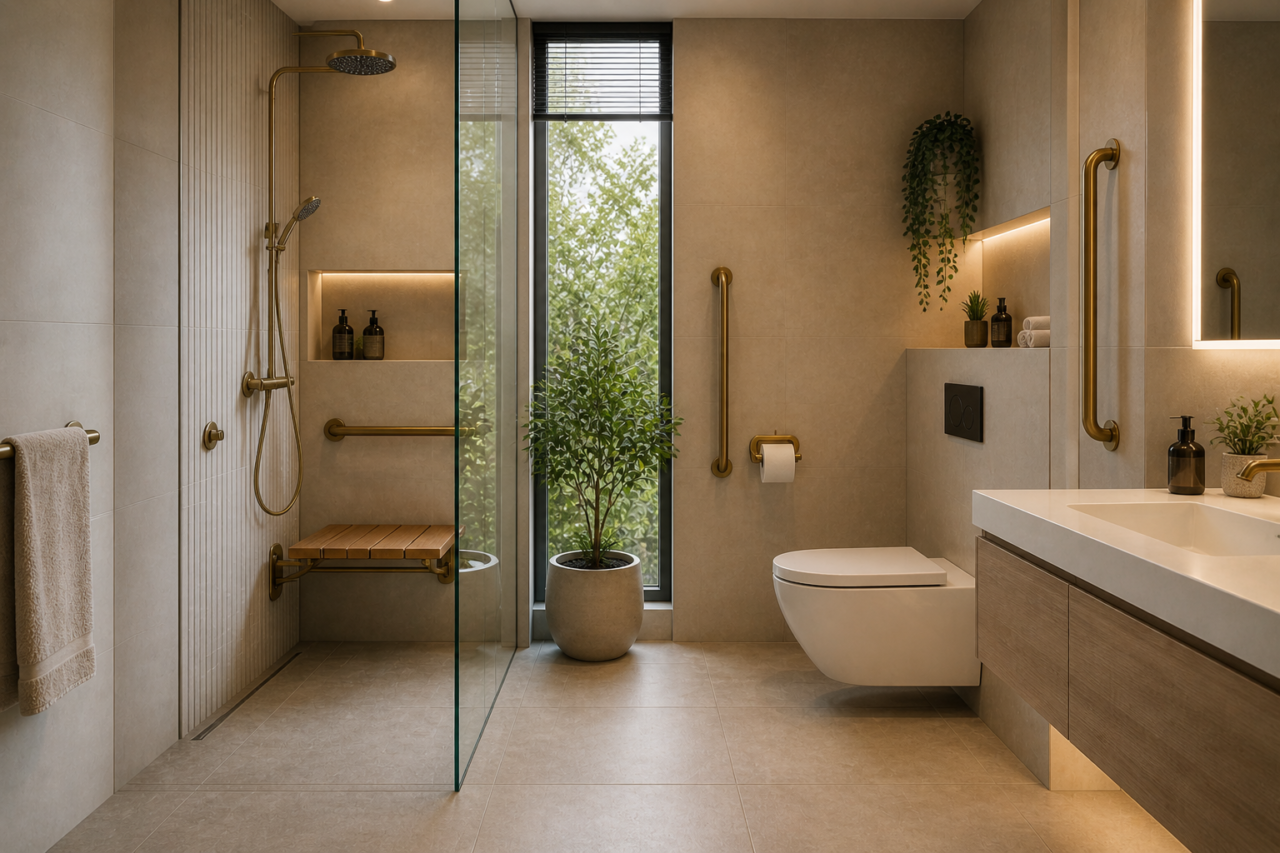
A walk-in shower is one of the best choices for an accessible bathroom. It reduces the need to step over a high edge, which can make showering safer and easier.
A level or low-threshold shower also gives the bathroom a cleaner and more modern look. In addition, it can make the room feel larger and more open.
If possible, plan enough shower space so the user can move comfortably. A fixed glass screen can work well, but the layout should still allow easy access.
2. Use Non-Slip Flooring
Bathroom floors can become slippery very quickly. That is why flooring is one of the most important safety decisions.
Choose tiles or flooring with a suitable anti-slip surface. Also, avoid very glossy floor tiles in wet areas because they can become dangerous when wet.
Good floor preparation is also important. The floor should be level, stable, and properly finished so water flows toward the drain.
3. Add Grab Bars in the Right Places
Grab bars can provide extra support near the shower, toilet, or bath area. However, they must be placed correctly and fixed securely.
Modern grab bars do not need to look medical. Many designs are now simple, stylish, and suitable for modern bathrooms.
Before installation, check the wall structure. A grab bar must be attached to a strong surface so it can safely support weight.
4. Improve Bathroom Lighting
Good lighting makes the bathroom safer and more comfortable. Poor lighting can make it harder to see water on the floor, edges, steps, or small obstacles.
Use a combination of ceiling lighting, mirror lighting, and soft night lighting if needed. For example, a low-level night light can help during late-night bathroom visits.
In addition, choose lighting that is suitable for bathroom zones and moisture conditions.
5. Keep Enough Movement Space
An accessible bathroom needs enough space to move comfortably. This is especially important around the shower, toilet, sink, and door.
If the room is small, choose compact fixtures and avoid unnecessary furniture. Floating furniture can also make the floor area feel more open.
Before buying sanitaryware, always check door swings, cabinet openings, and walking routes.
6. Choose a Comfortable Toilet Height
Toilet height can make a big difference in comfort. A toilet that is too low can be difficult for some people to use.
A comfort-height toilet may be easier for elderly users, taller people, or people with knee or back problems. However, the right height depends on the users of the home.
For this reason, it is smart to decide the toilet height before installation begins.
7. Select a Practical Sink and Vanity
The sink area should be easy to reach and use. A floating vanity can create more floor space and make cleaning easier.
Also, choose drawers or storage that can be opened comfortably. Avoid sharp corners where possible, especially in smaller bathrooms.
If future accessibility is important, consider whether the sink area could remain usable for different needs later.
8. Plan Storage Carefully
Good storage keeps the bathroom safer and cleaner. When bottles, towels, and accessories are placed on the floor or shower area, they can become obstacles.
Use wall niches, closed cabinets, and easy-to-reach shelves. In addition, keep daily items at a comfortable height.
Simple storage decisions can reduce clutter and improve safety.
9. Think About Ventilation
Ventilation is important in every bathroom. Moisture can lead to mould, bad smells, and damage to walls or ceilings.
Good ventilation helps remove steam and keeps the bathroom healthier. This is especially important in bathrooms with walk-in showers because more open wet areas can increase moisture in the room.
For general information about ventilation and a healthy home, homeowners can also read guidance from Milieu Centraal.
10. Avoid Sharp Edges and Unnecessary Steps
Small details can have a big impact. Sharp edges, raised thresholds, small steps, and awkward corners can make the bathroom less safe.
During the renovation, try to create smooth transitions and simple walking routes. Also, choose fixtures with softer shapes where possible.
As a result, the bathroom becomes easier to use and more comfortable for daily life.
Accessible Bathroom Features to Consider
The table below gives a simple overview of useful accessible bathroom features.
| Feature | Why It Helps |
|---|---|
| Walk-in shower | Reduces stepping and improves access |
| Non-slip flooring | Helps reduce slip risk in wet areas |
| Grab bars | Provides support near shower and toilet |
| Good lighting | Improves visibility and safety |
| Comfort-height toilet | Can make sitting and standing easier |
| Floating vanity | Creates more visible floor space |
| Shower niche | Keeps products off the floor |
| Better ventilation | Helps reduce moisture and mould risk |
Common Mistakes in Accessible Bathroom Renovation
Many accessibility problems happen because the design is planned too late. For example, homeowners may choose tiles, furniture, and sanitaryware first, and only later think about safety and movement.
Below are common mistakes to avoid.
| Common Mistake | Better Decision |
|---|---|
| Choosing slippery floor tiles | Use suitable non-slip flooring |
| Adding grab bars too late | Plan wall support before finishing |
| Keeping a high shower threshold | Choose a low-threshold or walk-in shower |
| Poor lighting | Use layered bathroom lighting |
| Too much furniture | Keep movement space clear |
| Ignoring ventilation | Plan moisture control from the start |
Accessible Bathroom Design Can Still Look Beautiful
One common misunderstanding is that an accessible bathroom must look like a hospital bathroom. This is not true.
With the right materials and details, an accessible bathroom can look warm, modern, and elegant. For example, brass grab bars, beige tiles, soft lighting, and a glass shower screen can create a stylish and comfortable atmosphere.
The best design combines safety with beauty. Therefore, accessibility should feel like a natural part of the bathroom, not a separate medical feature.
Accessible Bathroom Renovation Budget
The cost of an accessible bathroom renovation depends on the size of the room, the current condition, the materials, and the amount of technical work.
A simple update may include better lighting, grab bars, non-slip flooring, or improved storage. A full renovation may include demolition, waterproofing, new tiles, plumbing, electrical work, ventilation, sanitary installation, and final finishing.
In many cases, keeping the existing layout can reduce cost. However, if the shower, toilet, sink, or drain points need to move, the budget can increase.
If you want to understand general renovation pricing, you can also read our guide about home renovation cost.
Do You Need a Permit for a Bathroom Renovation?
Many bathroom renovations do not need a permit. However, larger changes may require extra checks. For example, structural changes, major ventilation changes, or work that affects the building structure may need approval.
Before starting bigger renovation work, it is smart to check the official Omgevingsloket Vergunningcheck.
This can help you avoid delays, extra costs, or legal problems later.
How Diyara Can Help
At Diyara, we help homeowners plan bathroom renovations with clear communication, practical decisions, and quality workmanship.
An accessible bathroom is not only about adding a grab bar. It is about planning the full space carefully, including movement, safety, lighting, materials, ventilation, and finishing.
Diyara can support different parts of a bathroom renovation, including:
- bathroom renovation planning;
- demolition preparation;
- wall and floor finishing;
- tiling coordination;
- painting and plastering;
- lighting and layout planning;
- general renovation support;
- quality finishing.
Ask Diyara Before You Start
If you are planning an accessible bathroom renovation, it is useful to discuss your ideas before making final decisions.
Contact Diyara and send photos, measurements, or a short description of your bathroom. We can help you understand the best next step for your renovation project.
Diyara — Practical bathroom renovation, smart planning, and quality workmanship.
FAQ
What is an accessible bathroom renovation?
An accessible bathroom renovation means improving the bathroom so it is safer, easier to use, and more comfortable. This can include a walk-in shower, non-slip flooring, grab bars, better lighting, and more movement space.
Is an accessible bathroom only for elderly people?
No. An accessible bathroom can help everyone. It can be useful for families, children, elderly users, people recovering from injury, and homeowners who want a future-proof bathroom.
Can an accessible bathroom look modern?
Yes. With the right design, an accessible bathroom can look modern, warm, and stylish. Safety features can be integrated in a clean and elegant way.
What is the most important feature in an accessible bathroom?
A walk-in shower, non-slip flooring, good lighting, and enough movement space are among the most important features.
Can Diyara help with accessible bathroom renovation?
Yes. Diyara can help with bathroom renovation planning, practical design decisions, finishing work, and general renovation support.
3 comments
Geovanni Considine
January 25, 2018 at 9:35 am
Doloribus veniam qui quisquam. Voluptatem porro in magni. Voluptatem et doloribus voluptatum cupiditate itaque molestiae dicta quae.
Ms. Rita Thompson
January 25, 2018 at 9:35 am
Quaerat et deserunt tempore laboriosam iure suscipit libero quia. Impedit doloribus sed error quae debitis voluptas. Natus dolor sapiente beatae et et explicabo. Et totam et ea ut commodi voluptatem nulla quas.
Grant Hagenes
January 25, 2018 at 9:35 am
In aliquam rerum sunt eligendi cum et dolorem. Expedita repellendus aut totam inventore dolores.
Ut aut sint fugiat cupiditate dolor. Explicabo dignissimos et modi et facilis harum. Iusto consequatur nihil aspernatur ipsum atque.